
Malta Property Tax Guide
Stamp Duty, AIP Permits and Buying Costs Explained
Stamp duty in Malta is one of the most significant transactional costs associated with acquiring property. Whether purchasing a primary residence, an investment property, or transferring ownership within a family, understanding how stamp duty in Malta is calculated and applied is essential for accurate financial planning.
This guide provides a structured, precise overview of stamp duty in Malta, outlining the applicable rates, payment timelines, and the various incentives and exemptions available to buyers.

Stamp Duty in Malta
What is Stamp Duty?
Stamp duty in Malta is a tax levied by the government on the transfer of immovable property. It is typically calculated on the higher of the declared purchase price or the property's market value, as assessed by the authorities. This ensures that transactions reflect fair market conditions and prevents undervaluation.
The Standard Rate: 5%
The standard rate of stamp duty in Malta is 5% of the higher of the purchase price or market value. This applies to most property transactions, including second homes and investment properties.
Example:
If a property is purchased for €800,000, stamp duty in Malta would typically amount to €40,000.
Reduced Rates and Exemptions
Malta offers a number of structured incentives depending on buyer profile and intended use:
| Buyer Type | Stamp Duty Rate |
|---|---|
| Standard Purchase | 5% |
| EU Buyer (Primary Purchase) | 3.5% on first €200,000, then 5% |
| First-Time Buyer | 0% on first €200,000, then 5% |
| Property in Gozo | 2% |
| Family Transfer (Parent to Child) | 1.5% |
| Donation to Descendants | 0% on first €250,000, then 3.5% |
| Urban Conservation Area (UCA) | 0% on first €750,000 — reduced rates may apply on excess |
Key Considerations
• Stamp duty is a one-time transactional cost, not an ongoing liability
• The applicable rate depends on residency status and intended use
• Eligibility for incentives is assessed within the legal framework of the transaction
When is Stamp Duty Paid?
Stamp duty in Malta is not settled in a single payment. It is structured across two key stages of the transaction:
1. Promise of Sale (Konvenju)
Upon signing the Promise of Sale (Konvenju), the buyer pays:
• 10% of the agreed sale price
• 20% of the total stamp duty due (provisional payment)
2. Final Deed of Sale
The remaining:
• 80% balance is paid upon final contract (deed of sale)
This phased approach allows buyers to manage cash flow more efficiently during the acquisition process.

Stamp Duty Rates by Buyer Profile
Reduced Rate for EU Citizens (Primary Residence)
EU citizens purchasing their primary residence in Malta may benefit from a reduced rate:
• 3.5% on the first €200,000
• 5% on the remaining balance
Example:
On a €800,000 primary residence:
• First €200,000 at 3.5% = €7,000
• Remaining €600,000 at 5% = €30,000
• Total stamp duty: €37,000
This incentive is designed to support owner-occupiers entering the property market.
First-Time Buyer Exemption
First-time buyers benefit from one of the most attractive incentives within the framework of stamp duty in Malta:
• Full exemption on the first €200,000 of the property value
Any value above this threshold is taxed at the standard rate of 5%.
Example:
On a €600,000 property:
• First €200,000 = 0% (exempt)
• Remaining €400,000 at 5% = €20,000
• Total stamp duty: €20,000
This significantly reduces the upfront cost for new entrants to the market.
Gozo Reduced Rate
To encourage property investment in Gozo, a reduced stamp duty rate of 2% applies. This incentive has consistently positioned Gozo as an attractive option for both lifestyle buyers and investors seeking value.
• 2% on qualifying property purchases in Gozo
Family Transfers: Preferential Rates
Stamp duty in Malta also provides a considered framework for intergenerational transfers, with preferential rates designed to facilitate the seamless passage of property within families. Transfers from parents to children are subject to a reduced rate of 1.5% on the overall property value, offering a tax-efficient mechanism that supports long-term planning while preserving asset value across generations.
Donations to Descendants
When property is donated (rather than sold) to descendants:
• The first €250,000: exempt from stamp duty
• Any excess: taxed at 3.5%
This structure supports long-term estate planning and wealth transfer strategies.
Urban Conservation Areas (UCAs)
Urban Conservation Areas (UCAs) are designated zones aimed at preserving the architectural and historical character of Malta's towns and villages. Properties within UCAs often feature traditional elements such as timber balconies, internal courtyards, stone staircases, and period façades reflective of Maltese heritage.
From a fiscal perspective, qualifying UCA properties may benefit from significant stamp duty incentives, including:
• Full exemption on the first €750,000 of the property value
• For any excess value, reduced rates may apply, subject to prevailing schemes
Eligibility is strictly tied to official designation, not merely appearance or age. In certain cases, incentives may also extend to properties that are vacant for extended periods or older buildings undergoing restoration, provided they meet the relevant criteria.
Given that standard stamp duty in Malta is typically 5%, UCA schemes can represent a material saving and should be assessed carefully with professional guidance.

AIP Permits, Special Designated Areas and Conservation Zones
Acquisition of Immovable Property (AIP) Permits
An Acquisition of Immovable Property (AIP) permit is a regulatory requirement that applies in specific purchasing scenarios within the Maltese property market. It forms part of Malta's framework for managing property ownership by non-residents, while remaining a straightforward and well-established process within the overall acquisition timeline.
Overview
• A government-issued authorisation linked to certain property acquisitions
• One-off cost: €233
Who Requires an AIP Permit
• Non-EU nationals purchasing property outside Special Designated Areas
• EU nationals who have resided in Malta for fewer than five years and are not acquiring a primary residence
Who Does Not Require One
• Buyers acquiring property within a Special Designated Area (SDA) — these developments are fully accessible to all nationalities and do not require an AIP permit
• Citizens of all European Union member states, including Maltese citizens, who have resided continuously in Malta for a minimum period of five years at any time prior to acquisition, may freely acquire immovable property without the need for an AIP permit under Chapter 246 of the Laws of Malta
Permitted Use
• Typically restricted to residential purposes
• Short-term letting is not permitted under AIP conditions
• Long-term leasing may be possible, subject to regulatory approvals
Process
• Generally processed within a matter of weeks
• Integrated into the broader acquisition timeline without adding significant complexity
• Typically managed by the buyer's notary or legal representative, ensuring a seamless administrative process
Overall, while the AIP permit introduces an additional step in certain cases, it is a clearly defined and efficiently administered requirement that rarely presents a barrier to acquisition when properly guided.
Special Designated Areas (SDAs)
Special Designated Areas represent the most streamlined acquisition route for international buyers. Within these developments, property may be acquired without AIP restrictions, irrespective of nationality — placing Maltese, EU, and non-EU buyers on equal footing and removing the principal regulatory barrier that would otherwise apply to non-EU nationals purchasing outside these developments. While SDA designation does not confer specific stamp duty reductions, standard incentives — such as those available to first-time buyers or EU nationals purchasing a primary residence — remain fully accessible.
The advantages extend beyond acquisition. SDA properties may be inherited by heirs of any nationality without AIP restrictions, and there is no limit on the number of units a buyer may hold — making these developments well-suited to portfolio accumulation and long-term estate planning. Combined with Malta's standard inheritance duty of 5% and the complete absence of annual property or wealth tax, SDA ownership offers a structurally efficient framework not only at the point of purchase, but across generations.

A Practical Perspective
Acquisition Costs - Examples
A Practical Perspective
To provide a clear, practical perspective on acquisition costs, the following examples reflect typical property purchases across different segments of the Maltese market. Each scenario combines financial clarity with contextual insight into location, property type, and regulatory considerations.
Example 1 — Non-EU buyer acquiring a prime apartment at Tigné Point (Special Designated Area)
Tigné Point is one of Malta's most established lifestyle destinations, positioned on a peninsula directly opposite Valletta. It offers a refined blend of residential, retail, and leisure, making it particularly attractive to international buyers seeking a secure, waterfront investment with strong long-term appeal.
As a Special Designated Area (SDA), Tigné Point allows both EU and non-EU nationals to purchase property freely, without the need for an Acquisition of Immovable Property (AIP) permit and without restriction on the number of properties owned.
At a purchase price of €1,500,000, the property would typically comprise a high-specification apartment with generous internal layouts, expansive terraces, and open-plan living areas designed to maximise light and views. Many units benefit from direct sea or skyline outlooks, as well as access to underground parking and nearby amenities.
• No AIP permit required — Tigné Point is a Special Designated Area
• Stamp duty: 5% × €1,500,000 = €75,000
• Notary fees (estimated 1.5%): €22,500
• AIP permit: not applicable
• Annual property tax: €0
• Estimated total buying cost: approximately €97,500 plus agency fees
Example 2 — EU first-time buyer acquiring a primary residence in Sliema
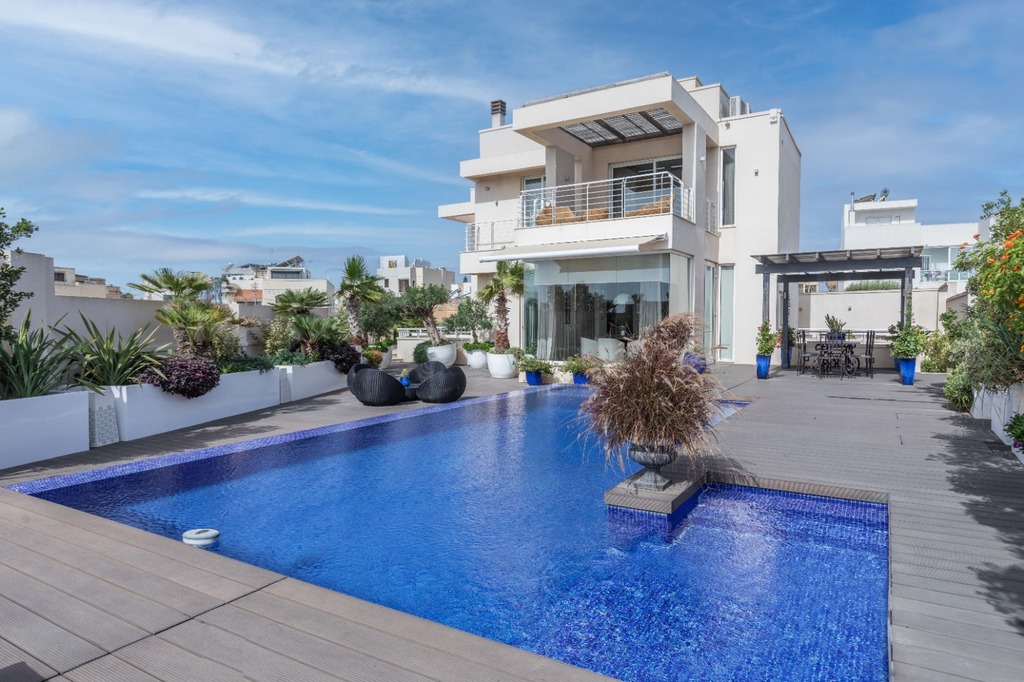
Example 3 — Non-EU buyer acquiring a villa in Madliena (outside an SDA)
Property Transfer Tax in Malta
Malta operates a final withholding tax regime on property disposals, a system in place since 2015 which replaced the traditional capital gains framework. This approach provides greater certainty at the point of transfer, as tax is calculated on the transaction value rather than on the gain realised.
• The standard rate is 8% of the transfer value
• A reduced rate of 5% applies where the property has served as the seller's primary residence for at least three consecutive years immediately prior to transfer.
Additional Considerations
• Malta does not impose any form of annual property tax or council tax, which remains a notable advantage for long-term ownership and wealth preservation
• Inheritance (duty on documents) is typically levied at 5% of the property value
• There is no wealth tax in Malta, further enhancing its appeal as a stable and efficient jurisdiction for international buyers, investors, and high-net-worth individuals (HNWIs) seeking both lifestyle advantages and long-term fiscal optimisation

Rental Income Tax in Malta
Rental Income Tax in Malta
Malta has long been recognised as a stable and accessible market for property investment, and its approach to rental income taxation reflects that same clarity of intent. Rather than subjecting landlords to the complexity of progressive income tax rates and annual filing obligations, Malta offers a defined, efficient regime that allows investors to calculate net returns with confidence — before they sign a contract, not after.
For buyers acquiring property as an investment, understanding the tax treatment of rental income is as important as understanding the costs of acquisition. Malta's rental income tax regime is structured to be straightforward, predictable, and administratively efficient.
The 15% final withholding tax
Residential rental income in Malta is generally subject to a final withholding tax at a flat rate of 15%, applied to gross rental receipts. This is a final tax: income taxed under this regime does not ordinarily need to be included in the annual tax return, and it does not interact with other income sources for the purposes of calculating an individual's overall tax position.
For investors managing income from multiple sources or jurisdictions, this simplicity carries real practical value — the tax liability is settled cleanly, allowing for accurate net yield modelling from the outset.
Registration of rental agreements
Long-term residential rental agreements in Malta are required by law to be registered with the relevant authority. Registration is a straightforward process and is a precondition for accessing the 15% flat rate regime. It also provides a legally enforceable framework for both landlord and tenant, and is a standard step in any well-managed tenancy.
VAT on Rental Property
VAT treatment varies depending on how a property is used and the nature of the letting arrangement — a distinction that carries practical consequences for investors assessing their overall cost and compliance position.
Residential rental income is generally exempt from VAT in Malta. For the majority of property investors letting on a long-term residential basis, no VAT registration or charging obligation arises, keeping the administrative burden to a minimum.
Where a property is operated as tourist accommodation and holds a licence issued by the Malta Tourism Authority (MTA), a VAT rate of 7% may apply. This is Malta's reduced rate for accommodation services and applies to short-term and holiday lets operating within the licensed framework. Investors considering the short-term rental market should factor this into their yield calculations and compliance planning.
Certain commercial leasing arrangements may also attract VAT, depending on the nature of the lease and the parties involved. The specific treatment will depend on the intended use of the property and the structure of the agreement.
| Letting Type | VAT Treatment |
|---|---|
| Long-term residential rental | Generally exempt |
| MTA-licensed tourist accommodation | 7% VAT may apply |
| Commercial leasing arrangements | VAT may apply — subject to specific conditions |
What this means in practice
Tax rate on rental income 15% (flat, applied to gross receipts)
Annual tax return required? Generally not under this regime
Registration of agreements Required for long-term lets
Annual property tax None in Malta
The combination of a flat 15% rental income rate, VAT exemption on residential letting, and the complete absence of annual property taxation positions Malta favourably when compared with many European jurisdictions, where recurring property levies, progressive income tax rates, and VAT obligations can significantly erode investment returns.

Other Property Taxes & Ownership Costs
| Cost | Who Pays | Rate / Amount |
|---|---|---|
| Stamp duty | Buyer | 5% standard Reduced rates apply — see Section 1 |
| Notary fees | Buyer | Approximately 1–2% |
| Agency fees | Buyer | Confirm with Christie's International Real Estate Malta |
| AIP permit | Non-EU buyers Outside SDAs only | €233 one-off |
| Property transfer tax | Seller | 8% 5% if primary residence |
| Annual property tax | Nobody | None in Malta |
The absence of annual property taxation materially enhances long-term ownership efficiency when compared with jurisdictions such as the UK, Germany or France.
Key Considerations for Buyers
When planning a property acquisition, stamp duty in Malta should be considered alongside:
• Notarial fees
• Registration costs
• Bank charges (if financing is involved)
Importantly, eligibility for reduced rates or exemptions depends on specific criteria, and professional advice from a notary is essential to confirm final liabilities.

How Christie’s Real Estate Malta Can Help
Christie’s International Real Estate Malta provides structured guidance throughout the acquisition process, ensuring complete clarity on taxation, regulatory requirements and overall cost exposure. Working alongside a trusted network of notaries and tax advisers, we facilitate a seamless and well-informed transaction, while also connecting clients with independent legal counsel where required.
Success!

Take A Look
Book Your Luxury
Property Tour Today!


