Luxury Living
30 April 2026
How UK, US and UAE Buyers Can Purchase Property in Malta
1 min read
Malta has established itself as one of the most strategically positioned property markets in the Mediterranean for international buyers seeking either relocation, second-home ownership, or long-term investment exposure within the European Union. Interest from the United Kingdom, the United States, and the United Arab Emirates has grown steadily due to Malta’s combination of political stability, English-speaking legal environment, eurozone currency alignment, and relatively transparent property ownership framework. However, the Maltese system is highly structured, and understanding the distinction between Special Designated Areas and non-designated property is essential before any acquisition is considered.

Legal Basis of Property Ownership in Malta for Foreign Buyers
Foreign ownership of immovable property in Malta is regulated by the Immovable Property Acquisition framework, which applies differently depending on whether the buyer is an EU national or a third-country national. Buyers from the United Kingdom, United States, and United Arab Emirates are all classified as non-EU nationals for Maltese property law purposes.
Non-EU buyers are permitted to purchase property in Malta, but outside Special Designated Areas they are generally subject to three key restrictions. First, they must obtain an Acquisition of Immovable Property permit prior to final deed of sale. Second, they are typically restricted to purchasing a single residential property. Third, the property is generally expected to be used as a primary residence rather than a commercial investment asset. These rules are designed to regulate foreign ownership in the wider housing market while maintaining accessibility for relocation purposes.
Inside Special Designated Areas, these restrictions do not apply. SDAs are government-approved residential and mixed-use developments specifically designed to attract international investment. Within these zones, foreign nationals may acquire multiple properties without requiring an acquisition permit, and ownership rights are equivalent to those of Maltese citizens.
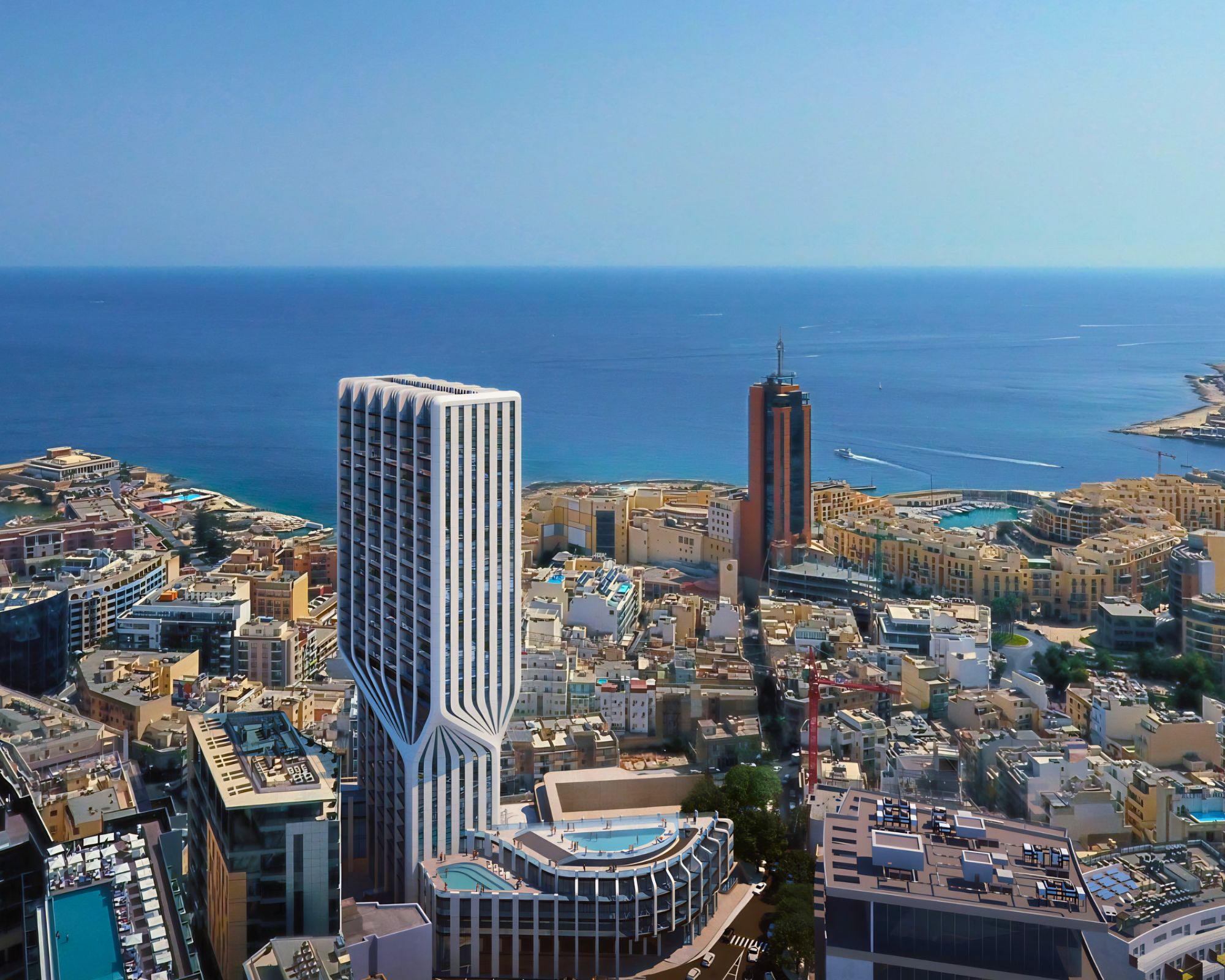
Special Designated Areas and Investment Structure
Special Designated Areas represent the most important structural element of the Maltese property market for international investors. These developments include high-end residential projects such as Portomaso, Tigné Point, Fort Cambridge, Pendergardens, and Mercury Towers, among others.
The key legal and commercial characteristics of SDAs include unrestricted foreign ownership, exemption from acquisition permits, and full rights to lease property both on a long-term residential basis and on a short-term tourism rental basis, subject to licensing compliance. This makes SDAs the only segment of the Maltese property market where genuine investment-driven acquisition is structurally supported.
Outside SDAs, the regulatory framework is significantly more restrictive. Non-SDA properties acquired by non-EU nationals under permit conditions are generally intended for personal occupation. As a result, rental activity is either prohibited or severely limited, which has a direct impact on yield potential and investment suitability. This distinction is critical for buyers evaluating Malta as either a lifestyle relocation destination or an income-generating property market.
Property Purchase Process in Malta
The acquisition process in Malta is highly formalised and legally secure, with notarial oversight at the centre of all transactions. Once a property is selected, the buyer and seller enter into a preliminary agreement known as the Konvenju, or promise of sale agreement. This document sets out the agreed purchase price, conditions of sale, timelines, and any regulatory requirements such as acquisition permits where applicable.
At this stage, a deposit is typically paid, commonly around ten percent of the purchase price. The notary public then conducts full due diligence, including title verification, planning compliance checks, and confirmation that the property is free from encumbrances or legal disputes. Once all conditions are satisfied and any required permits are approved, the transaction proceeds to final deed of sale, at which point ownership is transferred.
The overall timeline for completion typically ranges from three to twelve months depending on regulatory approvals and transaction complexity.
Taxation on Property Purchase in Malta
The primary tax payable on property acquisition in Malta is stamp duty, which is generally levied at a standard rate of five percent of the property purchase price. This is typically structured with a portion payable at preliminary agreement stage and the remainder upon final deed of sale.
Unlike many other jurisdictions, Malta does not impose an annual property ownership tax. This is a significant structural difference compared to systems such as the United Kingdom and United States, where recurring property taxation is a key component of ownership cost. Instead, Malta concentrates taxation at the point of acquisition and disposal.
Additional transaction-related costs include notarial fees and legal expenses, which are generally lower than in many other European jurisdictions.

Rental Taxation and Income Treatment
Rental taxation in Malta applies primarily to properties that are legally permitted to be rented, which in practice means properties located within Special Designated Areas or properties licensed for rental activity under Maltese regulatory frameworks.
Property owners have two principal tax options for rental income. The first is a flat final withholding tax of fifteen percent on gross rental income. This option is administratively simple and is often used by non-resident landlords. The second option is to declare rental income under Malta’s progressive income tax system, allowing for deduction of allowable expenses such as maintenance, management fees, and financing costs.
Short-term rental activity, including holiday lets, is regulated by the Malta Tourism Authority and requires appropriate licensing. Long-term rentals are governed by residential lease legislation, which defines minimum lease durations and tenant protections.
Capital Gains Tax on Property Disposal
When property in Malta is sold, taxation is applied in the form of property transfer tax rather than a pure capital gains tax on profit. In most residential transactions, tax is calculated as a percentage of the transfer value rather than the gain achieved on sale.
The standard effective rate typically ranges between eight and ten percent, although the exact rate depends on factors such as length of ownership, whether the property was used as a primary residence, and whether any exemptions apply. In certain cases, particularly where the property has been used as a long-term primary residence, reduced rates or exemptions may be available, subject to strict qualification criteria.
Tax is generally withheld at source by the notary at the point of sale, ensuring compliance before transfer is completed.
Comparison with United Kingdom, United States and United Arab Emirates
For UK buyers, Malta presents a structurally different tax environment. The UK applies progressive stamp duty land tax, often significantly higher for second homes, alongside annual council tax and capital gains tax on disposal. Malta eliminates annual property tax, which materially reduces long-term holding costs.
For US buyers, the key difference lies in the absence of recurring state-level property taxes in Malta and the lack of a layered federal-state capital gains structure. However, US citizens remain subject to worldwide income taxation in their home jurisdiction, which requires careful cross-border tax planning.
For UAE investors, Malta introduces a formal taxation structure on both acquisition and disposal, contrasting with the UAE’s tax-free property ownership environment. However, Malta offers EU residency access potential, which is often a strategic driver for relocation-focused buyers.
Rental Rights and Structural Investment Implications
One of the most important distinctions in the Maltese market is the relationship between property location and rental rights. Only SDA properties offer full flexibility for rental use, including short-term holiday letting and long-term leasing. Outside SDAs, rental rights are restricted or not permitted under standard ownership structures for non-EU nationals.
This creates a dual market structure. SDAs function as investment-grade assets with income potential and liquidity advantages, while non-SDA properties function primarily as residential relocation assets with limited commercial utility.
Residency and Long-Term Planning Considerations
Property ownership in Malta does not automatically grant residency rights. However, it can support eligibility under structured residence programmes, including the Malta Permanent Residence Programme and the Global Residence Programme. These frameworks impose minimum property value or rental thresholds, along with income and compliance requirements, and are commonly used by international buyers seeking long-term relocation within the European Union framework.

The Maltese property market is defined by regulatory clarity, but also by a strict structural division between Special Designated Areas and non-designated residential property. For UK, US, and UAE buyers, this distinction is the most important factor in determining whether Malta is approached as an investment market or a relocation destination.
SDAs provide full ownership rights, rental flexibility, and investment scalability. Non-SDA property is primarily designed for personal residential use under permit-based restrictions. Taxation is concentrated at acquisition and disposal stages, with no annual property tax, while rental income and capital gains are subject to defined Maltese tax mechanisms.
For international buyers, Malta offers a stable and legally transparent EU property environment, but success in acquisition strategy depends on correctly aligning legal structure, property location, and intended use from the outset.
Buying property in Malta offers clear advantages for UK, US and UAE buyers, particularly through Special Designated Areas where ownership is unrestricted and rental potential is fully accessible. However, the legal and tax framework requires careful navigation, especially when dealing with acquisition permits, rental limitations outside SDAs, and capital gains on resale.
Working with an experienced advisor can make a significant difference in aligning the purchase with both investment and relocation goals. Christie's International Real Estate combines global reach with local expertise, providing access to prime properties and guiding clients through every stage of the acquisition process with precision and discretion.
Success!

Take A Look
Book Your Luxury
Property Tour Today!


